
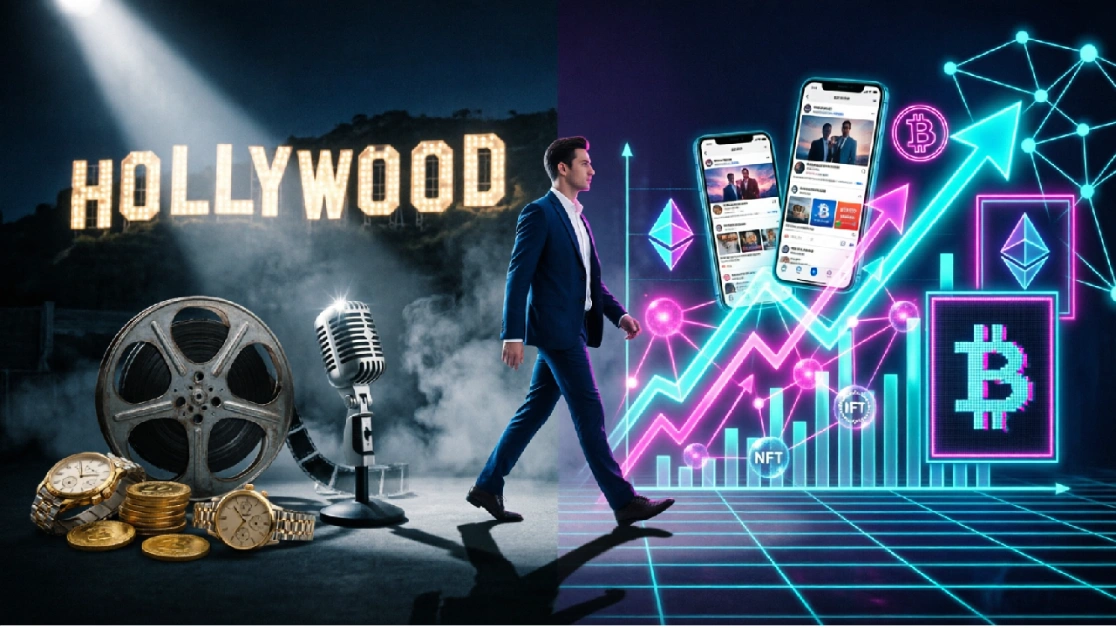
The Real Income Sources of Modern Celebrities: Fame Doesn’t Pay the Bills Anymore, Ownership Does
There was a time when being a famous actor, musician, or athlete was enough. Studios paid, labels paid, sponsors paid. The celebrity just had to show up.
That model is largely dead.
In 2026, the most financially powerful celebrities aren’t necessarily the most famous ones. They’re the ones who understood early that attention is a raw material — and figured out how to convert it into assets, not just paychecks.
This article breaks down where celebrity money actually comes from today, what’s growing, what’s fading, and what the influencer economy changed permanently.
Then vs. Now: How Celebrity Income Has Shifted
The old model (pre-2015):
- Film/TV salaries as the primary income
- Record label advances and music royalties
- Traditional brand endorsements (flat fees, no equity)
- Licensing deals managed by agents
The new model (2026):
- Platform-native monetization (YouTube, TikTok, Substack)
- Owned consumer brands and equity stakes
- Influencer-style sponsored content at scale
- Direct-to-audience products and communities
- Investment portfolios built on personal brand leverage
The fundamental shift? Celebrities moved from being paid for their name to being paid for their audience. That’s a meaningfully different business.
The Core Income Sources of Modern Celebrities
1. Brand Deals & Influencer-Style Sponsorships
How it works today: Brand deals have evolved from simple logo placements to full content integrations. Celebrities now behave like creators — filming their own sponsored posts, integrating products into their daily content, and negotiating based on engagement rates, not just follower counts.
How it evolved: Traditional endorsements were passive. A celebrity’s face appeared in a print ad or TV commercial, and that was it. Today, brands want native content that feels organic — and they’re measuring whether audiences actually respond.
Real-world style example: A musician with 8 million Instagram followers but a highly engaged fanbase can command more per sponsored post than a mainstream celebrity with 40 million followers and low interaction.
Why it’s powerful:
- Fast income with relatively low time investment
- Brands compete for authentic voices over famous names
- Recurring deals create predictable revenue streams
The risks nobody talks about:
- Audience trust is finite. Over-sponsoring destroys it fast.
- Brand deals dry up when relevance fades — and there’s no severance.
- Platform algorithm changes can kill reach overnight, making a deal suddenly worthless mid-contract.
2. Owned Businesses — Brands, Products, and Startups
How it works today: The smartest celebrity move in the last decade wasn’t signing a deal — it was launching one. Celebrities are now co-founders, majority shareholders, or sole owners of consumer brands in beauty, wellness, spirits, fashion, and food.
How it evolved: Previously, celebrities “collaborated” with brands for a fee. Now they take equity or build outright. The difference in long-term return is enormous.
Real-world style example: A celebrity who holds a 30% equity stake in a DTC beverage brand they helped build is in a fundamentally different financial position than one who was paid a flat fee to appear in the same brand’s ads for two years.
Why it’s powerful:
- Compounding value — the brand grows independently of the celebrity’s continued fame
- Exit opportunities (acquisitions, IPOs) create generational wealth
- Personal brand and business brand feed each other
The risks:
- Most celebrity brands fail or plateau quickly
- Audiences are increasingly skeptical of “celebrity products” that feel manufactured
- Operational complexity is often underestimated — this is a real business, not a side project
3. Social Media Monetization
How it works today: YouTube ad revenue, TikTok Creator Fund payouts, Instagram subscriptions, and Patreon-style memberships are now legitimate income lines — not just ego metrics. Celebrities who treat their social channels as media businesses, not promotional tools, earn accordingly.
How it evolved: Five years ago, most A-list celebrities ignored platform monetization. It felt beneath them. That attitude has largely disappeared as they watched creators build comparable incomes without any traditional credentials.
Why it’s powerful:
- Revenue scales with content output, not with fame level
- Passive income from older content (especially YouTube)
- Diversifies away from a single industry (film, music, sports)
The risks:
- Platform dependency is a real vulnerability. TikTok’s regulatory uncertainty alone has disrupted creator income at scale.
- Content burnout is common — consistency is harder than it looks.
- Algorithm changes can cut organic reach without warning.
4. Digital Products, Courses, and Communities
How it works today: Paid newsletters, online courses, gated communities, and masterclasses have become serious income channels — especially for celebrities in fitness, business, cooking, or personal development adjacent spaces.
Why it’s powerful:
- High-margin with low overhead
- Directly monetizes expertise rather than just attention
- Builds deeper audience relationships that hold over time
The risks:
- Requires genuine expertise, not just fame. Audiences will tolerate a mediocre sponsored post — they won’t tolerate a weak $500 course.
- Saturated market in most popular niches
- Customer support and community management costs are often invisible until they aren’t
5. Licensing & Royalties
How it works today: Music royalties, film residuals, image licensing, and intellectual property rights remain foundational for many celebrities — particularly musicians and actors from catalog-heavy careers.
The shift: Streaming changed the royalty math completely. Per-stream rates are fractions of what per-play rates were in the physical era. Artists now often treat music as a marketing tool for tours and merchandise rather than a primary income source.
The uncommon insight: Music catalog acquisition has made royalties a financial product. When a celebrity sells their back catalog to a private equity fund, they’re essentially liquidating a royalty stream for a lump sum — trading future income for present capital to reinvest.
6. Investments & Equity Deals
How it works today: Celebrities increasingly take equity in startups and companies instead of cash for endorsements. Some have formalized this into personal venture portfolios.
Why it’s powerful:
- Asymmetric upside — a small equity stake in a successful company outperforms any flat fee
- Aligns incentives — celebrities promote harder when they actually own a piece
The risks:
- Most startups fail. Celebrity equity in an early-stage company is often worth zero.
- Regulatory scrutiny on celebrity promotions of financial products (crypto, SPACs) has increased significantly.
The Influencer Effect: What Actually Changed
Influencers didn’t just create new competitors for celebrities — they rewrote the rules that brands use to value attention.
Before, brands paid for reach. More eyeballs, higher fee.
Now, brands pay for conversion. A mid-tier creator whose audience actually buys things is worth more to a DTC brand than a mega-celebrity whose followers admire from a distance.
This is why traditional celebrities started behaving more like creators — posting consistently, engaging audiences directly, and building niches rather than trying to appeal to everyone. The ones who resisted this shift have seen their commercial value fall.
The behind-the-scenes reality: Many celebrity brand deals are now negotiated based on engagement rates and audience demographic data — the same metrics used for influencer campaigns. The celebrity’s traditional “name value” is increasingly just one factor among several.
Contrarian Insight: What the Headlines Miss
Fame without audience ownership is becoming a liability.
A celebrity with 20 million followers on a platform they don’t control is one algorithm change away from irrelevance. The celebrities building real financial durability in 2026 are the ones who own their audience — through email lists, paid communities, and direct-to-consumer channels where no platform can cut off access.
Not all creator income is equal.
High follower counts and viral moments generate attention. They don’t automatically generate income. The celebrities and creators who monetize most effectively are the ones with deeply engaged, trust-based audiences — not the widest ones.
How to Evaluate a Celebrity’s Real Income Power
Use this checklist to assess whether a celebrity’s financial position is actually strong or just surface-level impressive:
- Audience ownership: Do they have an email list, paid community, or direct channel beyond social media?
- Product vs. promotion: Do they own products, or do they only promote other people’s?
- Platform dependency: Is their income tied to one or two platforms that could depress or remove their reach?
- Revenue diversity: Do they have at least 3–4 distinct income streams?
- Equity vs. fees: Are they taking ownership positions in businesses, or accepting one-time payments?
- Content consistency: Are they functioning as a media business, or just occasionally posting?
A celebrity who fails more than two of these checks has less financial resilience than their public profile suggests.
Common Misconceptions About Celebrity Income
“Celebrities make most of their money from movies and TV” For working actors, salary income still matters. But for the financially strongest celebrities in 2026, entertainment income is often a minority of total earnings — or a marketing channel for businesses they own.
“More followers = more income” Consistently false. A 2-million-follower account with high trust and niche relevance regularly outearns 20-million-follower accounts with diffuse, low-engagement audiences. Brands know this now.
“Celebrity businesses are just vanity projects” Some are. But several celebrity-founded brands have become genuinely valuable independent businesses — acquired by major consumer goods companies at figures that had nothing to do with celebrity novelty.
What This Means for Fans, Brands, and Aspiring Creators
For a deeper look at how celebrities structure and protect this income, see the full breakdown in How Celebrities Make and Manage Money in 2026 (Beyond Fame).
For fans: The celebrity you follow is increasingly running a media and commerce business. Understanding that changes how you read their content.
For brands: Follower count is a vanity metric. Audience trust and conversion behavior are what actually justify the spend. Evaluate creator partnerships and celebrity deals with the same rigor.
For aspiring creators: The income model is available to anyone willing to build an engaged audience and diversify into ownership. Fame is no longer a prerequisite — but consistency, trust, and product thinking are.
The clearest lesson from modern celebrity economics is this: attention that you rent from platforms is fragile. Audiences you own, products you build, and equity you hold are what actually compound.