
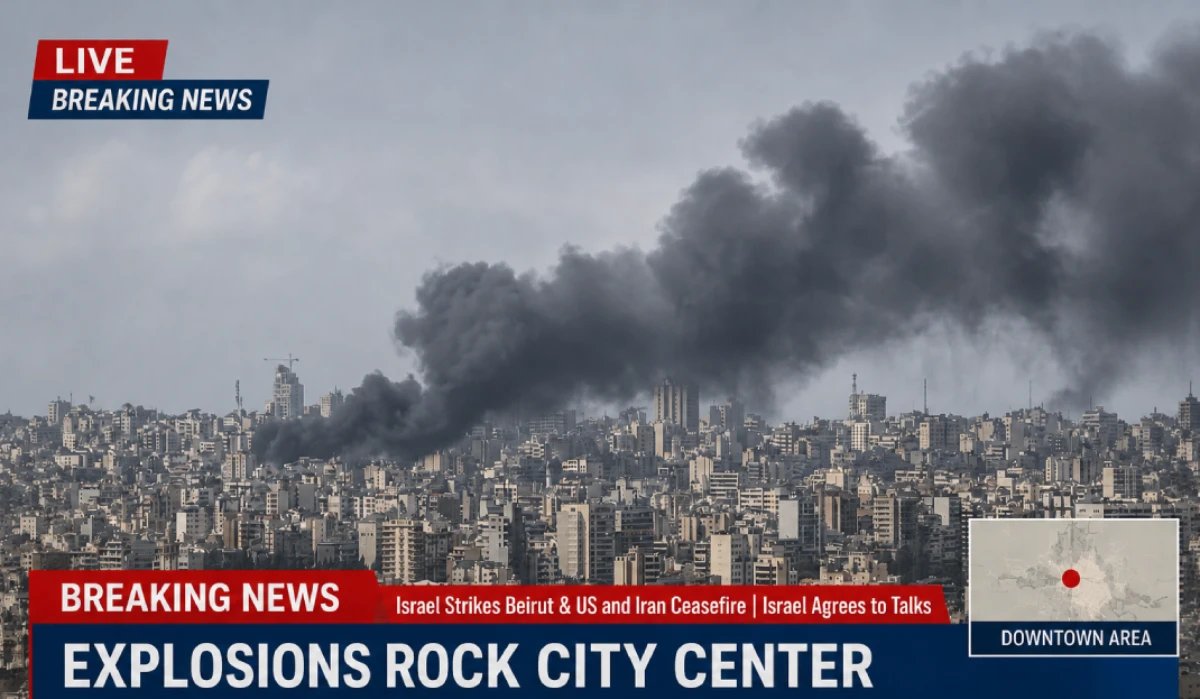
Israel Strikes Beirut & US and Iran Ceasefire | Israel Agrees to Talks. Recent developments have seen significant shifts in the geopolitical landscape of the Middle East, particularly concerning Israel, Lebanon, and the complex interplay involving the United States and Iran. This article delves into the immediate aftermath of Israeli strikes in Beirut, the subsequent diplomatic efforts, and the potential for a new era of negotiations.
The Current Situation in Lebanon
Overview of Israel’s Strikes in Beirut
In a dramatic turn of events, Israel launched a series of missile strikes targeting Beirut, sending shockwaves across Lebanon and the wider region. These Israeli strikes were met with international concern, as they marked a significant escalation in the ongoing tensions between Israel and Lebanon. The Israeli military stated that the strikes were a response to perceived threats, though details remain contested. The immediate aftermath saw widespread damage in parts of Beirut, prompting fears of a broader conflict that could involve both Iran and the United States.
The Role of Hezbollah in the Conflict
Hezbollah, a powerful political party and militant group in Lebanon, plays a central role in the conflict with Israel. The Israeli government often cites Hezbollah’s presence and its alleged Iranian backing as a primary reason for its military actions in Lebanon. Hezbollah’s influence in southern Lebanon, in particular, has been a long-standing point of contention, frequently leading to cross-border skirmishes and heightened tensions between Israel and Lebanon.
Impact on Lebanese Civilians
The recent attacks in Lebanon have had a devastating impact on Lebanese civilians. Reports from the Lebanese Health Ministry indicate a significant number of casualties and widespread displacement due to the Israeli strikes. Evacuation orders were issued in several areas, forcing families to flee their homes amid the escalating strikes in Lebanon. The humanitarian situation across Lebanon has deteriorated, with aid organizations struggling to provide assistance to those affected by the ongoing conflict and the recent attacks on Lebanon, as reported by various news agencies.
Ceasefire Efforts between the US and Iran
Details of the Fragile Ceasefire Agreement
A fragile ceasefire agreement has reportedly been reached between the United States and Iran, aiming to de-escalate tensions that have been simmering for months. This agreement, though not officially confirmed by all parties, is understood to involve a cessation of certain military maneuvers and a commitment to indirect dialogue, as highlighted by news agency reports. The goal is to prevent a larger “war on Iran” and stabilize the region, especially considering past skirmishes near the Strait of Hormuz.
Challenges to the Ceasefire Implementation
Implementing this ceasefire faces significant hurdles, primarily due to the deep mistrust between the US and Iran. Both sides have differing interpretations of what constitutes compliance, and the presence of various proxy groups, such as Hezbollah, complicates matters further. Any perceived violation by either the “Iranian military” or “US military” could quickly unravel the delicate arrangement, leading to renewed hostilities and a potential “Iran war,” according to a foreign ministry spokesman.
Iran’s Position on the Ceasefire
Iran has expressed a cautious willingness to adhere to the ceasefire, emphasizing its desire for regional stability while maintaining its sovereign rights. “Tehran” has consistently called for the withdrawal of “US forces” from the region and an end to sanctions, which it views as economic warfare. “Mohammad Bagher Ghalibaf”, a prominent Iranian official, stated that while Iran welcomes diplomatic efforts, it will remain vigilant against any threats, especially in light of the ongoing “war in Iran” rhetoric.
Israel’s Agreement to Talks with Lebanon
Negotiation Strategies Employed by Israel
“Israel agrees to talks with Lebanon” following intense international pressure and a desire to de-escalate tensions in “Northern Israel” and along the border. The negotiation strategies employed by Israel are likely to focus on securing its northern border, addressing the presence of “Hezbollah” in “Southern Lebanon,” and discussing mechanisms to prevent future “Israeli strike” incidents. “Israeli Prime Minister Benjamin Netanyahu” has emphasized the need for tangible security guarantees.
Potential Outcomes of the Talks
The “negotiations with Lebanon” hold several potential outcomes, ranging from a formal border demarcation to a comprehensive security arrangement designed to prevent future “attacks in Lebanon” or retaliatory actions against “Israel.” A successful outcome could lead to a significant reduction in tensions between “Israel and Lebanon,” potentially ending the long-standing “occupation of Southern Lebanon” by “Hezbollah” and paving the way for a more stable future for “Lebanon” and the wider region.
International Reactions to Israel’s Agreement
The international community has largely welcomed the news that “Israel agrees to talks.” The “United States and Israel,” along with European nations, have urged both sides to engage constructively. The “foreign minister” of several countries has issued statements supporting the “negotiation” process, seeing it as a crucial step towards regional peace and stability. However, caution remains, given the history of failed peace attempts between “Israel and Lebanon” and the underlying complexities of the conflict, which include the roles of Iran and the United States.
Military Perspectives on the Conflict
Israeli Military Operations in the Region
The Israeli military has maintained a proactive stance in the region, often engaging in preemptive operations to counter perceived threats. These Israeli strikes are frequently aimed at targets in Lebanon, particularly those associated with Hezbollah, which Israel views as a significant security challenge along its northern border. The strategic rationale behind these operations often involves disrupting supply lines of advanced weaponry and degrading the capabilities of hostile non-state actors operating near Israel.
Missile Threats and Defense Strategies
Israel faces ongoing missile threats from various actors, including Hezbollah in Lebanon and potentially other groups backed by Iran. In response, Israel has heavily invested in sophisticated defense strategies, including its multi-layered missile defense system, such as the Iron Dome, as reported by a state news agency. These systems are designed to intercept incoming missiles, protecting Israeli civilian centers and military installations from rocket and missile attacks, thereby minimizing casualties and damage during conflicts with groups like Hezbollah.
Iranian Military Support for Hezbollah
The Iranian military provides substantial support to Hezbollah, a key proxy in the region, which significantly enhances Hezbollah’s operational capabilities. This support often includes funding, training, and the transfer of advanced missile technology, which complicates the security landscape for Israel and raises concerns about potential attacks on Iran. The strong ties between Iran and Hezbollah mean that any escalation between Israel and Hezbollah could potentially draw in Iran, further destabilizing the already volatile region of Israel and Lebanon.
FAQs
What triggered Israel’s strikes in Beirut?
Israel’s strikes in Beirut were reportedly triggered by what the Israeli military described as imminent threats emanating from Lebanese territory, particularly related to Hezbollah’s activities. While specific details remain contested, Israel often cites the need to prevent the accumulation of advanced weaponry by Hezbollah and to deter future attacks against Israeli targets, thereby leading to the Israeli strike operations that impacted Beirut and other parts of Lebanon.
How is the US involved in the ceasefire negotiations?
The United States has played a crucial mediating role in the fragile ceasefire negotiations between Israel and Iran, emphasizing the need to end the war., aiming to de-escalate tensions and prevent a broader regional conflict. US officials have engaged in extensive diplomatic efforts, both directly and indirectly, to facilitate dialogue and secure commitments from both sides. The involvement of the US and Iran is seen as essential for any lasting resolution, given their significant influence in the Middle East.
What are the implications of Israel agreeing to talks with Lebanon?
Israel agreeing to talks with Lebanon carries significant implications for regional stability, potentially paving the way for a reduction in cross-border tensions. These negotiations with Lebanon could address long-standing issues such as border disputes and the presence of Hezbollah in southern Lebanon, as emphasized by Israel Katz. A successful outcome from these talks could lead to a more formalized security arrangement, benefiting both Israel and Lebanon and fostering a period of relative calm.