
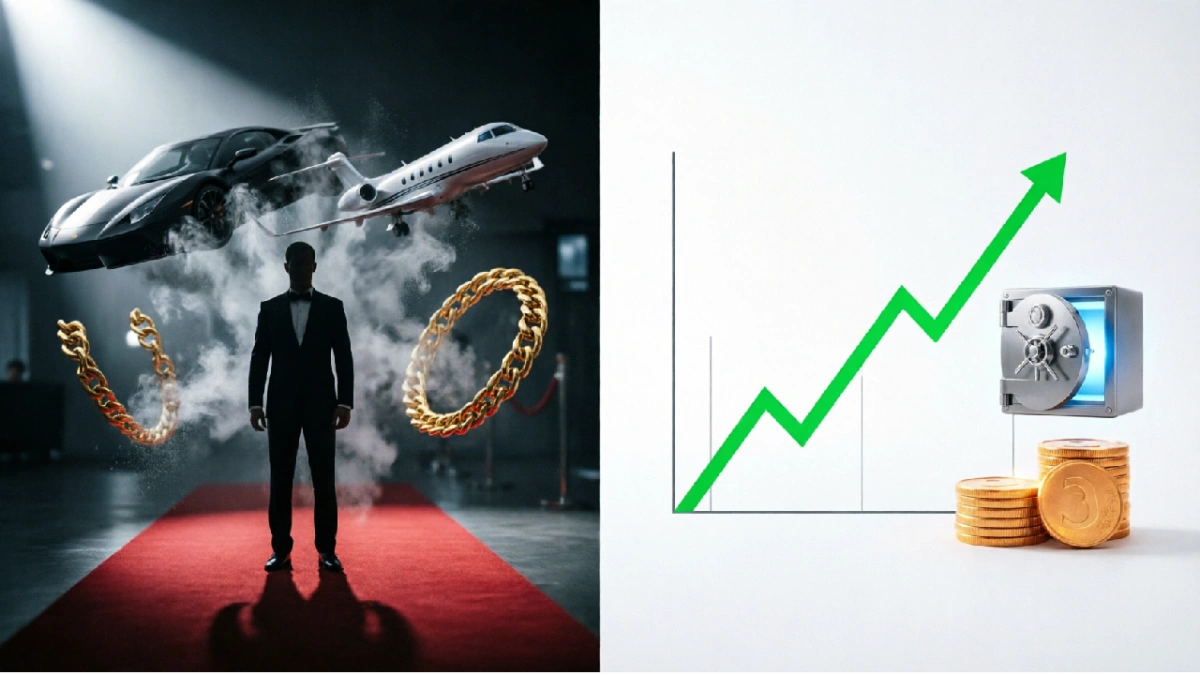
Celebrity Money Mistakes: Why Stars Go Broke (and What We Can Learn)
Celebrity Money Mistakes: When MC Hammer lost $33 million, it wasn’t just bad luck—it was a pattern. These wealth traps follow predictable behavioral finance principles: when sudden wealth meets unchecked spending psychology, collapse becomes likely. Kim Basinger won an Oscar, earned millions — and lost everything after a failed real estate deal. Nicolas Cage reportedly earned over $150 million across his career and ended up owing the IRS tens of millions. Here’s what stars get wrong about wealth, and the exact lessons anyone can apply to protect their own income.
These are not isolated stories. They follow a pattern.
Fame hits overnight—but financial wisdom? That takes years. Meanwhile, the celebrity ecosystem often profits more from your success than it protects your future.
This is not about being irresponsible. It is about operating inside a system that nobody prepared you for.
The Reality of Celebrity Wealth
High income looks like wealth. It is not the same thing.
Most celebrities earn in short, intense windows — a few peak years in music, sports, or film. A boxer’s career averages under 10 years. An NFL player’s career lasts about 3.3 years on average. Even top-tier actors face long gaps between major roles.
Money floods in fast. Your lifestyle upgrades to match. Then the checks stop arriving—but those new bills? They’re still due.
Implement quarterly cash flow forecasting to separate ‘earning years’ from ‘spending years’—this prevents lifestyle inflation from outpacing actual wealth.
Add in management fees (typically 15–20%), agent fees, publicist costs, stylist retainers, security teams, and the IRS taking nearly half of high-income earnings, and a $10 million payday can shrink to $2–3 million in spendable income before a single personal expense is paid.
This is the financial reality that most fans never see.
Top Celebrity Money and Fame Mistakes
Below are 7 documented celebrity money mistakes—with actionable fixes you can implement today:
1. Lifestyle Inflation That Never Stops
The fastest way a celebrity burns through money is by spending at the pace of their peak income — indefinitely.
Private jets, multiple properties, large personal staff, luxury cars, and lavish parties feel like reasonable expenses when you are earning $20 million a year. They become catastrophic when the income drops and the fixed costs do not.
Why it happens: Peer pressure within celebrity circles is extreme. Showing up to an event in a standard car or staying in a regular hotel feels like a public admission of decline. Spending becomes tied to status maintenance, not personal enjoyment.
Consequence: When income slows, many celebrities cannot downsize without public embarrassment. They borrow to maintain appearances, which accelerates the collapse.
Takeaway: Keep your lifestyle 2-3 years behind your income peak—this buffer protects you when fame fades. Build a 12-month emergency fund using cash flow management tactics before upgrading your lifestyle.
2. Misplaced Trust in Financial Advisors
Many celebrities hand full financial control to a manager or advisor with little oversight and no financial literacy to catch problems.
Former child star Gary Coleman was left nearly penniless partly due to decisions made by the adults managing his money. Rapper TLC went bankrupt despite selling 65 million records — in part because of deals made on their behalf that they did not fully understand.
Why it happens: Celebrities are often young, inexperienced, and managing careers full-time. Trusting “the team” feels logical. But unchecked access to wealth is an obvious vulnerability.
Before handing over control, verify your advisor operates under a fiduciary standard—legally requiring them to prioritize your financial health over commissions.
Consequence: Fraud, mismanagement, and poor investments often go undetected for years.
Takeaway: Basic financial literacy is non-negotiable. You do not need to be your own accountant, but you must understand your own financial statements.
3. No Long-Term Investment Strategy
Spending is natural. Investing requires deliberate effort — and a willingness to delay gratification that fame does not exactly reward.
A surprising number of high-earning celebrities end up with zero diversified assets: no index funds, no real estate portfolio, no business equity. Just cash and depreciating luxury goods.
Even allocating 10% of peak earnings to low-cost index fund investing creates compounding growth that outlasts fame cycles.
Why it happens: Financial planning feels like a problem for “later.” When you are 24 and earning millions, retirement feels irrelevant.
Consequence: When earning years end, there is nothing compounding in the background.
Takeaway: Start with just 10% of peak earnings in diversified assets—even modest, consistent investing during your top 3 earning years builds security that compounds for decades.
4. Depending on a Single Income Stream
A music artist who earns exclusively from touring. An actor who earns exclusively from film roles. A sports star with no income outside their playing contract.
These are fragile positions. One injury, one controversy, one industry shift — and the income disappears entirely.
Why it happens: When one thing is working spectacularly well, diversifying feels unnecessary. Until it is not working anymore.
Consequence: The collapse is total rather than partial.
Takeaway: Multiple income streams — licensing, endorsements, real estate, owned businesses — are not optional for long-term stability.
5. Ignoring Personal Brand Evolution
Fame has a shelf life. The celebrity who refuses to adapt to where culture is moving gets left behind — not by audiences, but by the industry that monetizes those audiences.
Many established celebrities resisted digital platforms for years, seeing them as beneath their status. That resistance cost them relevance while newer names built loyal audiences of millions.
Why it happens: Success creates rigidity. If something made you famous, abandoning it feels like a betrayal of identity.
Consequence: Gradual irrelevance, reduced booking rates, and diminishing commercial value.
Takeaway: A celebrity’s brand must evolve as audiences evolve. Relevance is not passive — it requires active maintenance.
6. Legal Trouble and Reputation Damage
A single lawsuit, criminal charge, or public scandal can erase years of brand-building overnight.
Beyond the legal fees — which can run into the millions even for cases that are won — the commercial cost is severe. Sponsors walk. Film roles disappear. Streaming deals collapse.
Why it happens: Wealth creates a false sense of consequence-immunity. And entourages rarely tell celebrities uncomfortable truths.
Consequence: Reputational damage is often permanent in an era when nothing is deleted from the internet.
Consider reputation insurance policies that cover crisis PR costs—treating brand protection as a budgeted asset, not an afterthought.
Takeaway: Legal counsel and reputation management are not expenses — they are insurance on your entire career value.
7. Losing Relevance in the Digital Era
This is perhaps the most underappreciated threat to legacy celebrity wealth. The digital economy has shifted where attention — and therefore money — flows.
A celebrity with 2 million passive social media followers generates far less commercial value than an influencer with 800,000 engaged ones. Engagement, not reach, is now the primary metric brands pay for.
Many traditional celebrities never built direct audience relationships. Their fanbase is mediated by studios, labels, and management. When those institutions move on, the connection dissolves.
Why it happens: Old-media celebrities were never taught to cultivate direct audiences. The system did it for them.
Consequence: Reduced brand deal value, limited alternative income paths, and full dependence on institutional gatekeepers.
Takeaway: Direct audience ownership — an email list, an active community, a consistent content presence — is career infrastructure.
How Influencer Culture Is Changing This
Modern influencers entered the game already aware of some of these traps — partly because they watched celebrities fall into them publicly.
Many diversify early: brand deals, digital products, merchandise, subscription communities, and equity stakes in brands they promote. Their income is rarely dependent on a single platform or studio relationship.
They also own their audience directly. A YouTuber with 500,000 subscribers can reach all of them without paying a record label or booking a publicist.
That said, influencers are not immune. Many repeat the exact same mistakes — lifestyle inflation, poor financial planning, no investment strategy, and over-reliance on a single platform. The stakes are lower at the start. The psychology is identical.
For deeper analysis on how digital fame changes wealth dynamics, read our guide: How Social Media Is Redefining Celebrity Wealth in 2026. As the creator economy shifts power to direct audience monetization, celebrities must adapt their wealth strategies accordingly.
The Contrarian Insight
Fame is not the problem. Poor financial systems are.
Athletes who go broke were not reckless by nature. Actors who lose everything are not uniquely irresponsible. Most of them simply had no financial infrastructure in place when large sums of money arrived suddenly and early in life.
The more uncomfortable truth: influencers who become wealthy quickly — without financial education, accountability structures, or long-term planning — will replicate every mistake on this list. The platforms are different. The psychology is not.
Celebrity Wealth Survival Checklist
Use this as a practical reference, not a prescription:
- Multiple income streams — at minimum three: active work, brand partnerships, and passive investments
- A financial team you understand — accountant, financial planner, and a lawyer who works for you, not your manager
- A personal brand that evolves — documented, consistent, and not locked to one era of your career
- Active digital presence — direct access to your audience that no studio or label can revoke
- Reputation management — proactive, not reactive; legal and PR counsel before a crisis, not after
- Spending boundaries tied to net worth, not gross income — lifestyle anchored to what you have, not what you earned last year
Common Misconceptions Worth Correcting
“Celebrities are always rich.” Many are highly paid for short periods. Few convert that into lasting wealth without deliberate planning.
“Fame guarantees continued success.” Fame creates opportunity. It does not sustain itself. Relevance must be rebuilt continuously.
“Influencers are financially smarter than traditional celebrities.” Some are. Many are not. The tools and platforms are different. The financial discipline required is identical.
What Creators, Audiences, and Aspiring Public Figures Can Learn
The patterns here are not specific to famous people. They apply to anyone whose income is irregular, attention-dependent, or career-stage-limited.
Build the infrastructure before you need it. Diversify income before the single stream dries up. Invest in your financial literacy before handing that responsibility entirely to someone else.
Ready to audit your own financial infrastructure? Download our free Celebrity Wealth Survival Checklist (PDF) or book a 15-minute strategy call with a certified fiduciary advisor who can run a no-obligation financial audit to spot gaps before they become crises.