
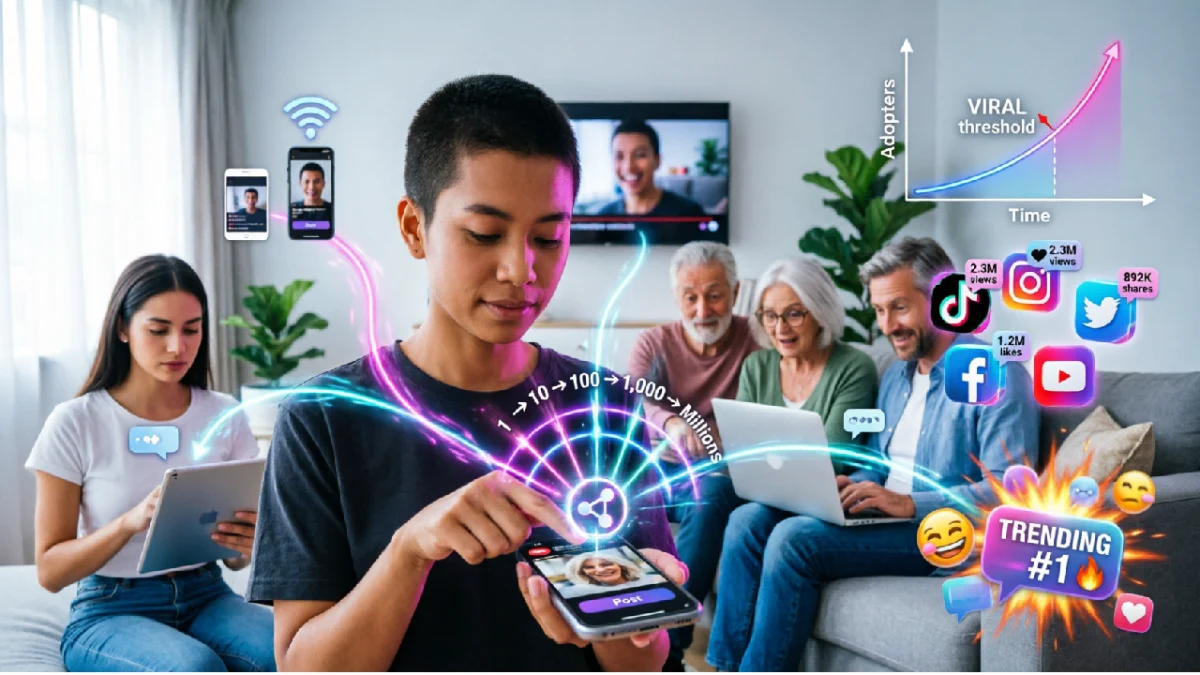
In the age of social media, the concept of something going viral has become a commonplace phenomenon, yet its underlying mechanisms are often misunderstood. This article delves into the fascinating world of virality, exploring what makes online content spread like wildfire across various social media platforms.
Understanding Virality
What Does It Mean to Go Viral?
To go viral signifies a rapid and widespread propagation of information, reaching a massive audience in a short period, often via social media. This phenomenon is distinct from mere popularity; it implies a contagion-like spread, where users are compelled to forward and amplify a piece of online content.
| Content Type | Characteristic |
|---|---|
| Information | Rapid and widespread propagation |
| Video (e.g., on YouTube) | Reaches a massive audience in a short period |
| Meme (across a social network) | Often via social media |
The process is often driven by word-of-mouth, which is significantly accelerated and broadened by the interconnectedness of modern social media platforms. A viral video or a viral post, for instance, might be shared millions of times, becoming a dominant trend that captures public attention and conversation for a considerable duration, far exceeding the reach of traditional media theory alone.
The Psychology Behind Viral Content
The psychology behind why certain online content is likely to go viral is complex, involving a blend of emotional responses and social processes. Jonah Berger, a professor at the University of Pennsylvania, extensively researched the key drivers of virality. He suggested that content prone to virality often evokes high-arousal emotions and possesses certain characteristics:
| Category | Characteristics |
|---|---|
| Emotional Responses | Evokes high-arousal emotions (positive or negative), such as awe, anger, or anxiety. |
| Social Processes | Offers social currency, is perceived as useful, interesting, or surprising, and enhances image or strengthens social connections. |
Dopamine and Its Role in Engagement
The role of dopamine in engagement is central to understanding the psychological mechanisms that drive content to go viral. This neurotransmitter, associated with pleasure and reward, reinforces the behavior of engaging with and sharing content. The anticipation of likes and shares also activates the brain’s reward system, encouraging users to create content and participate in its spread. Researchers like Lin and Chen have utilized ‘big data’ and computational social science to analyze these psychological processes, revealing how the quest for social validation and the inherent pleasure of connection can amplify the virality of a piece of content, turning a simple post into a widespread trend.
The release of dopamine is triggered by specific user interactions:
| Interaction Type | Dopamine Release Trigger |
| Online Content Engagement | Content that provides novel or rewarding experiences |
| Social Media Platforms | Anticipation of likes and shares on platforms like TikTok, Facebook, and Twitter |
The Process of Diffusion
How Content Diffuses Across Platforms
The diffusion of online content across social media platforms is a complex process akin to a contagion, where a piece of viral content spreads from one user to another, rapidly amplifying its reach. This propagation often begins when an initial user creates content, which then gets shared within their immediate social network. From there, if the content resonates with a broader audience, it can go viral as users forward it to their connections, often via social media. Platforms like TikTok, Facebook, and Twitter facilitate this rapid spread through their interconnected structures, allowing a viral video or a viral post to quickly reach millions. Understanding these psychological mechanisms and social processes is crucial for anyone aiming to make content viral on social media, leveraging the power of collective sharing and interaction.
The Role of Social Capital in Virality
Social capital plays a pivotal role in determining whether a piece of online content will go viral. Individuals with high social capital – those who are well-connected and influential within their social network – can significantly mediate the initial spread of content. When such individuals share a viral post or a viral video, their endorsement lends credibility and visibility, encouraging their followers to also forward and amplify it. This mechanism leverages trusted relationships and existing social currency, transforming a simple share into a powerful propagation tool. The more social capital an individual possesses, the more likely their shared content is to go viral, demonstrating how personal influence acts as a catalyst in the journey of content becoming viral on social media.
Factors Influencing the Spread of Viral Posts
Several factors influence the widespread diffusion and virality of posts across social media platforms. High-arousal emotional responses, as theorized by researchers like Berger from the University of Pennsylvania, are key; content that evokes strong emotions such as awe, anger, or amusement is far more likely to go viral. The perceived social currency of the content also plays a significant role, as users are more inclined to share posts that enhance their image or provide value to their network. Furthermore, the timing and relevance of the online content to current trends can amplify its reach, making it a viral trend. The use of ‘big data’ and computational social science techniques allows for data mining into these elements, helping to predict and understand why certain posts become viral on social media.
Case Studies of Viral Success
Analyzing Viral Posts on TikTok
Analyzing viral posts on TikTok offers unique insights into the dynamics of virality on social media platforms, a key area of study within computational social science. TikTok’s algorithm, known for its ability to quickly push content to a massive audience, often mediates the initial surge that makes a video go viral. Many posts that go viral on TikTok leverage short-form video content, often accompanied by trending sounds or challenges. The quick consumption and easy sharing mechanisms on the platform contribute significantly to the rapid propagation of content, making it a prime example of how quickly online content can become a viral trend. Understanding these psychological mechanisms helps us comprehend why certain snippets of video content activate such widespread engagement and sharing, leading to immense virality.
Examples of Content That Went Viral on Social Media
Numerous examples illustrate how diverse online content went viral on social media, showcasing the power of emotional responses and social currency. Consider the “Ice Bucket Challenge,” a campaign that effectively utilized a call to action and social capital to go viral across Facebook and Twitter, raising significant awareness and funds for ALS research. Another compelling example is the “Doge” meme, which, through simple imagery and relatable humor, achieved widespread diffusion and became a global phenomenon, demonstrating how a simple piece of online content can transcend cultural barriers to become viral. These instances highlight how content that is either emotionally resonant, socially relevant, or inherently entertaining is likely to go viral, demonstrating the profound impact of social processes on virality.
Trends and Their Impact on Virality
Trends play a crucial role in amplifying virality and can significantly impact whether online content will become viral on social media. When content aligns with current events, popular culture, or emerging themes, it stands a much higher chance of achieving widespread diffusion. Platforms like TikTok are particularly adept at fostering trends, with users often creating content that riffs off existing viral videos or challenges, effectively leveraging social capital and shared interests. This cyclical nature of trends means that new viral content can emerge from or contribute to an ongoing trend, creating a continuous feedback loop that ensures sustained propagation. Data mining techniques can reveal how quickly trends emerge and fade, offering insights into the ephemeral nature of virality in the age of social media.
Challenges and Considerations
Understanding the Age of Social Media
Understanding the intricacies of the age of social media is paramount for anyone hoping to see their online content go viral. In this era, the rapid dissemination of information via social media platforms has transformed traditional media theory, introducing new psychological mechanisms that drive content to become viral. The sheer volume of content available means that standing out requires a deep appreciation for what makes a viral video or a viral post resonate with users. This includes understanding the role of social capital, emotional responses, and the specific dynamics of each social network, from TikTok to Facebook and Twitter, all of which mediate the potential for content to activate widespread sharing and ultimately, virality.
The Risks of Chasing Virality
While the allure of having online content go viral is strong, chasing virality comes with inherent risks. Brands and individuals who create content solely for the purpose of achieving widespread diffusion can sometimes compromise authenticity or alienate their core audience. The pursuit of a viral trend can lead to sensationalism or the creation of content that lacks substance, undermining the genuine connection that often leads to sustained engagement rather than fleeting virality. Furthermore, not all content that goes viral is positive; negative emotional responses can also contribute to a piece of online content becoming viral, potentially damaging reputations or fostering misinformation, illustrating the dual-edged nature of propagation via social media.
Ethical Implications of Viral Content
The ethical implications surrounding viral content are increasingly pertinent in the age of social media. When content becomes viral, its rapid propagation can sometimes outpace critical evaluation, leading to the spread of misinformation or harmful narratives. The psychological mechanisms that make content likely to go viral, such as high-arousal emotional responses, can be exploited to manipulate public opinion or incite negativity. Therefore, those who create content have a responsibility to consider the potential societal impact of their online content, especially given how quickly a viral video or a viral post can spread across a social network and be amplified via social media, making ethical considerations a crucial part of understanding virality.