
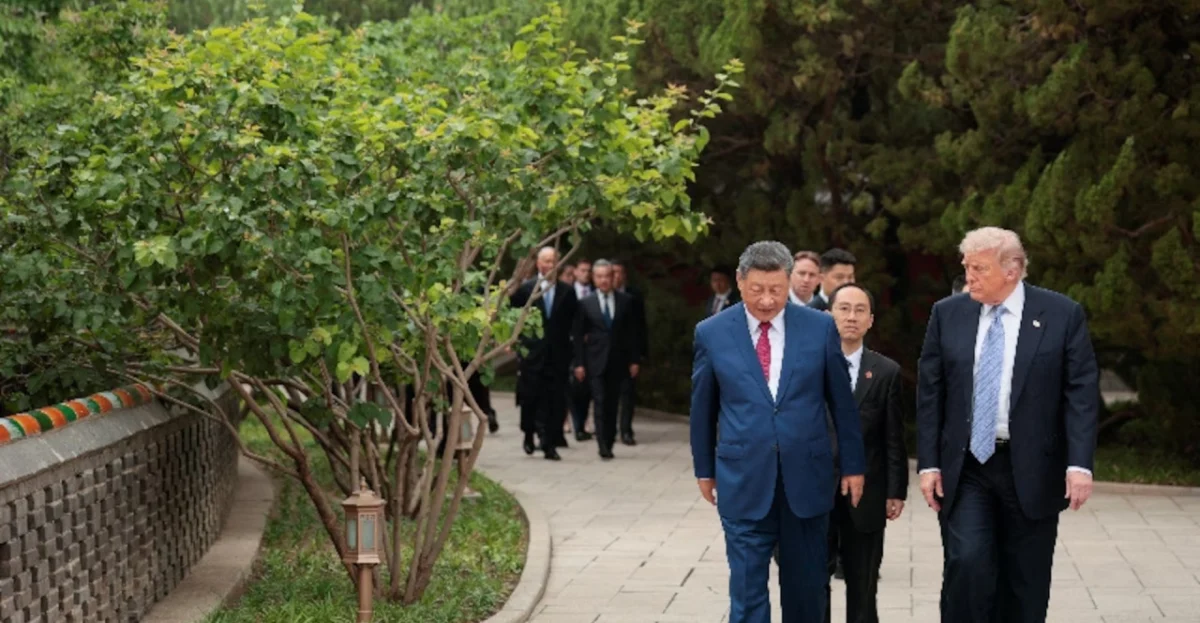
Xi Takes Trump on Tour of Beijing’s Communist Zhongnanhai. In a diplomatic gesture of unprecedented significance, Chinese President Xi Jinping invited US President Donald Trump on a private tour of Zhongnanhai, the exclusive compound in Beijing that serves as the central headquarters for the Communist Party of China. This extraordinary event, occurring during President Trump’s visit to Beijing, offered a rare glimpse into the heavily guarded seat of power, fostering a unique dynamic in the high-stakes summit between the two global leaders.
Introduction to Zhongnanhai
What is Zhongnanhai?
Zhongnanhai is an expansive leadership compound situated in the heart of Beijing. It is a critical center for political decision-making and the formulation of national policy, embodying the very essence of the Chinese government’s authority. This walled complex is adjacent to the more publicly accessible Forbidden City.
| Function | Location |
| Central headquarters for the Communist Party of China and the State Council | Beijing |
| Official residence and workplace for the top Chinese leaders | Beijing |
Historical Significance of the Seat of Power in Beijing
The historical significance of Zhongnanhai as the seat of power in Beijing is profound, tracing its roots back centuries as an imperial garden before its transformation into the epicenter of the Communist Party’s rule. For decades, it has been the highly secure location where Communist Party leaders live and work, orchestrating the nation’s political and economic trajectory. This compound has witnessed pivotal moments in Chinese history, from the early days of the People’s Republic to the modern era of reform and opening up, solidifying its status as an enduring symbol of national governance.
Overview of the Communist Party’s Influence
The Communist Party’s influence, emanating directly from Zhongnanhai, permeates every aspect of Chinese society, dictating both domestic and foreign policy. The decisions made within its walls shape the lives of over a billion people and significantly impact global affairs. This tour of Zhongnanhai, personally led by Chinese President Xi Jinping, highlighted the paramount authority and centralized control exerted by the Communist Party, showcasing to President Donald Trump the very core of China’s political machinery and the deep reach of its leadership.
Xi Invites Trump
The Context of the Invitation
The invitation extended by Chinese President Xi Jinping to US President Donald Trump for a private tour of Zhongnanhai was steeped in significant diplomatic context. This unprecedented gesture occurred during President Trump’s visit to Beijing, marking a departure from typical protocol for foreign heads of state, and it was a moment that Trump told Fox News was particularly significant. This move was particularly noteworthy for several reasons, including the personal connection established between Trump and Xi Jinping.
- It was a clear attempt by the Chinese leader Xi Jinping to establish a unique personal rapport with President Donald Trump, aiming to strengthen bilateral ties.
- It offered him an intimate glimpse into the exclusive compound where Communist Party leaders live and work, underscoring the importance of the Trump-Xi relationship.
Trump’s Response to Xi’s Invitation
President Donald Trump’s response to Chinese President Xi Jinping’s invitation was largely positive, with Trump expressing his appreciation for the rare opportunity. Trump told reporters and later reiterated to Fox News that the tour of Zhongnanhai was a highly memorable experience. This personal touch by Xi Jinping during Trump’s visit to Beijing was seen by the Trump administration as a sign of respect and a willingness to engage on a deeper level, setting a constructive tone for the broader summit discussions between the two leaders.
Implications for US-China Relations
The direct implications of Xi Jinping inviting Trump to Zhongnanhai are substantial for US-China relations. This personal engagement fostered a unique bond between the two leaders, potentially softening the edges of contentious issues discussed during the Trump-Xi summit. The symbolic weight of US President Donald Trump being granted access to the Communist Party’s seat of power in Beijing could signify a new era of dialogue, emphasizing personal diplomacy as a critical component in navigating the complex relationship between the two global powers. This event holds several key implications:
- It promises future cooperation between the US and China.
- It highlights the importance of personal diplomacy in complex international relations, a concept that Richard Nixon famously understood during his visit to China.
The Tour Experience
Highlights of the Tour with Xi
The tour with Xi Jinping through Zhongnanhai offered President Donald Trump an unparalleled glimpse into the very heart of China’s political establishment, where Communist Party leaders live and work. Highlights included walks through the meticulously maintained gardens and glimpses of historic buildings within the highly secure compound, a privilege rarely extended to foreign heads of state. President Trump observed firsthand the serene yet authoritative atmosphere of this critical seat of power in Beijing, a profound experience for any US President.
Key Locations Visited in Zhongnanhai
During the tour, President Donald Trump was notably guided through several key locations within the Zhongnanhai compound. These included areas traditionally reserved for high-level meetings and residential quarters of top Communist Party officials. The intimate visit allowed Trump to see where crucial decisions are made, emphasizing the significance of the “seat of power” in Beijing, as the Chinese leader Xi Jinping personally guided him through the complex. This unique access, where Chinese President Xi Jinping personally invited Trump, provided a direct insight into the exclusive world of China’s leadership.
Symbolism of the Visit
The symbolism of President Donald Trump’s visit to Zhongnanhai, personally led by Chinese leader Xi Jinping, was immense, as it represented a new era in US-China relations. It represented an extraordinary diplomatic gesture, signifying a deep level of trust and a desire for personal connection between the two leaders. Granting access to this guarded compound, where Communist Party leaders live, underscored the importance of the Trump-Xi relationship and served as a powerful message of China’s openness, albeit selectively, to the US President.
Impact on Global Politics
Reactions from Other US Presidents
The reactions from other US Presidents to Trump’s tour of Zhongnanhai were notably varied, reflecting the unprecedented nature of the event. While no former presidents publicly condemned the visit, many former advisors and diplomatic experts highlighted the historical context, contrasting it with past US-China engagements. The access granted to President Donald Trump by Chinese President Xi Jinping was seen as a significant departure from previous protocols, showcasing the unique dynamics of the Trump-Xi summit.
Media Coverage of the Tour
Media coverage of the tour was extensive and largely speculative, given the secrecy surrounding the Zhongnanhai compound, with many commentators reflecting on how the visit to Beijing ended a period of strained relations. News outlets worldwide emphasized the rarity of a US President being granted such access, with many focusing on the personal diplomacy between Chinese President Xi Jinping and President Donald Trump. Reporters analyzed every detail, from the body language of the leaders to the implications for the future of US-China relations, making it a central theme of Trump’s visit to Beijing.
Long-term Effects on US-China Diplomacy
The long-term effects on US-China diplomacy stemming from the Zhongnanhai tour are still unfolding, but analysts suggest it could mark a new chapter in bilateral relations, especially after Xi said China had agreed to buy more American products. The personal rapport established between President Donald Trump and Chinese President Xi Jinping during the tour, where leaders live and work, might pave the way for more direct and perhaps less formal communication channels. This unique engagement could influence future negotiations and foster a deeper understanding between the two global powers, beyond typical diplomatic exchanges.