
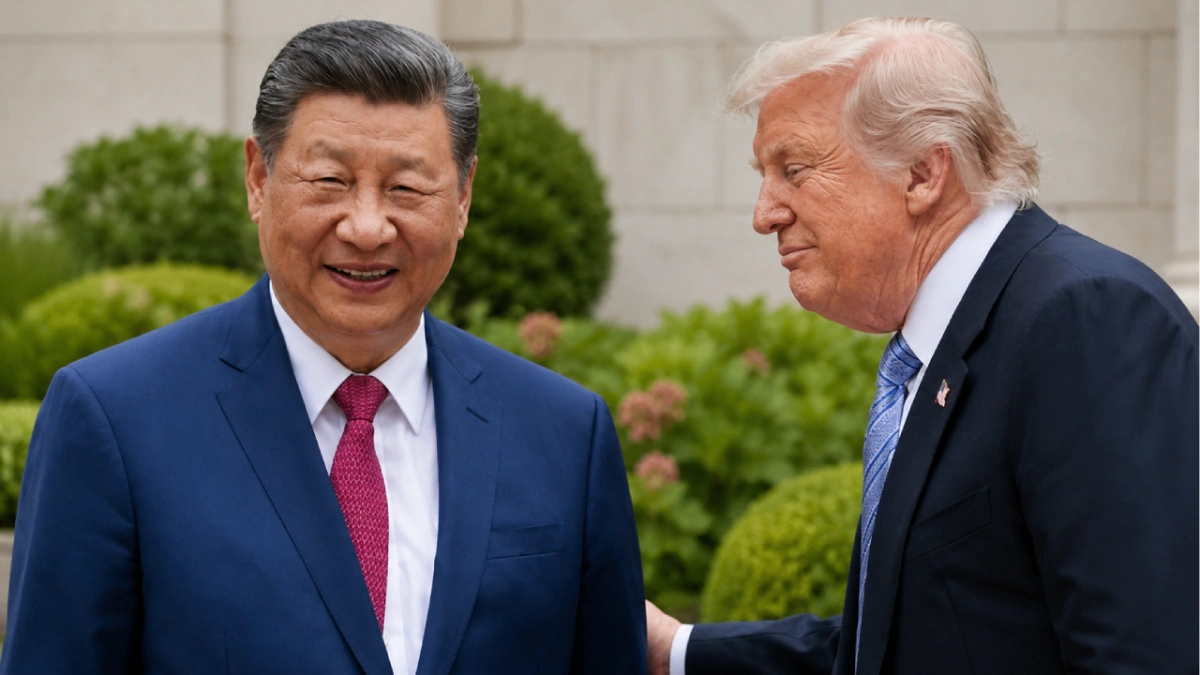
US President Trump and Xi Conclude Talks but No Deals Confirmed. In a highly anticipated series of discussions, US President Donald Trump and China’s President Xi Jinping recently concluded their talks, leaving many observers questioning the tangible outcomes. Despite a backdrop of significant global economic implications, the leaders wrapped up their meetings with no deals confirmed, a point of considerable speculation and analysis.
Overview of the Talks
Key Participants and Their Roles
The principal figures in these pivotal discussions were US President Donald Trump and China’s President Xi Jinping, both of whom were leading trade talks for Washington and Beijing respectively. Other high-ranking officials from both nations also participated, providing expert counsel and support.
| Figure | Key Focus / Objectives |
|---|---|
| US President Donald Trump | Addressing unfair trade practices; seeking more balanced economic relations between the US and China. |
| China’s President Xi Jinping | Projecting an image of a confident and cooperative global power; safeguarding China’s economic interests and strategic objectives. |
Objectives of the Discussions
The discussions between the US and China had primary objectives centered on resolving long-standing trade imbalances and intellectual property concerns. US President Donald Trump arrived in Beijing on Air Force One aiming to secure concrete trade deals, hoping to create more equitable market access for American businesses and reduce the significant trade deficit. China’s President Xi Jinping, while acknowledging the importance of a stable economic relationship, sought to emphasize areas of mutual cooperation and avoid any outcomes that might be perceived as concessions under pressure.
| Key Concern | US Perspective/Objective remains centered on ensuring that China would be buying more American goods to balance trade. | China’s Perspective/Objective |
|---|---|---|
| Trade Imbalances | Reduce the significant trade deficit; more equitable market access for American businesses, which China has agreed to buy into if terms are favorable. | Emphasize mutual cooperation; avoid outcomes perceived as concessions. |
| Intellectual Property | (Implicit: Resolution of concerns) | Avoid outcomes perceived as concessions, particularly regarding technology transfer and market access for foreign firms. |
Duration and Format of the Talks
The talks between President Trump and Xi Jinping spanned several days, including formal meetings, state dinners, and more informal engagements. The format was designed to allow for extensive dialogue, with both leaders having ample opportunity to present their perspectives. President Trump was wooed with warm rhetoric and symbolism throughout his visit, which included an elaborate welcome ceremony. Xi told US business leaders that China would continue to open up its economy. While the structure aimed to foster camaraderie and productive discourse, the final outcome of talks but no deals confirmed suggests that deep-seated disagreements persisted despite the carefully choreographed diplomatic efforts.
Outcomes of the Meeting
No Deals Confirmed: Implications
The conclusion of talks but no deals confirmed between US President Donald Trump and China’s President Xi Jinping carries significant implications for global trade and geopolitical stability. The absence of tangible trade deals, despite extensive negotiations led by US Trade Representative Jamieson Greer, suggests that fundamental disagreements between the US and China remain. This outcome could lead to continued uncertainty in financial markets and potentially escalate existing trade tensions. While President Trump had expressed optimism prior to his departure, the reality of no new agreements means that businesses on both sides will continue to operate without the clarity of new frameworks, potentially impacting supply chains and investment decisions, as the US President’s hopes for immediate breakthroughs were not realized.
Reactions from Both Leaders
Following the conclusion of the talks but no deals confirmed, reactions from both leaders offered differing perspectives on the progress made. US President Donald Trump, while acknowledging the lack of immediate trade deals, emphasized the positive relationship he had forged with China’s President Xi Jinping. Trump was wooed with warm rhetoric and symbolism throughout his visit, and Trump also said American farmers and businesses would benefit from future agreements. Xi said the two sides had agreed to continue discussions on various issues. However, the The absence of concrete commitments on key trade issues indicated that despite the warm rhetoric, substantive concessions were not made by either side, as Xi would later highlight., leading President Donald Trump to depart Beijing without the desired signed agreements.
Future Prospects for US-China Relations
Despite the current talks but no deals confirmed, the future prospects for US-China relations remain a complex and evolving landscape. The fact that Trump and Xi continue to engage in high-level dialogue, even without immediate breakthroughs, suggests a commitment to managing their intricate relationship. Trump also invited Xi to visit the US, indicating a desire for ongoing communication. While President Donald Trump left Beijing without the anticipated trade deals, the personal rapport established between the two leaders, as observed when Xi stayed close to Trump during the welcome ceremony, could serve as a foundation for future negotiations. Both the US and China recognize the critical importance of their economic interdependence, suggesting that while immediate progress may be slow, continued engagement to resolve trade imbalances and other contentious issues will likely persist, even if it requires more visits on Air Force One.
Analysis of the Negotiation Dynamics
Strategies Employed by Trump and Xi
In high-stakes discussions between President Trump and Xi, both leaders employed distinct strategies to advance their national interests, even though the talks concluded with no confirmed deals.
| Leader | Strategy |
|---|---|
| President Trump | Direct demands for fairer trade practices and a reduction in the trade deficit, frequently utilizing the threat of tariffs as leverage. Aimed to secure immediate trade deals beneficial to American farmers and businesses. |
| President Xi Jinping | More nuanced and long-term, emphasizing cooperation and the benefits of a stable relationship. Projected an image of a reliable global economic partner while subtly resisting pressures for rapid, sweeping concessions, especially given warm rhetoric and symbolism throughout Trump’s visit. |
Challenges Faced During Discussions
Despite the outward display of camaraderie, significant challenges plagued the discussions between President Trump and Xi, ultimately contributing to the outcome of talks but no deals confirmed. Fundamental disagreements over intellectual property rights, market access, and the overall trade imbalance The significant gaps between the US and China proved difficult to bridge, especially as Xi called for more equitable terms. The complex nature of these issues, coupled with deep-seated economic philosophies, meant that quick resolutions were elusive. Furthermore, the political pressures faced by both leaders—President Trump needing to deliver on his promises to American workers and Xi needing to maintain China’s economic sovereignty—added layers of complexity. While Xi said the two sides had agreed to continue discussions, the inherent difficulties prevented concrete trade deals from being finalized during this round of talks, leaving US President Donald Trump to depart without immediate breakthroughs.
External Factors Influencing the Talks
Several external factors significantly influenced the dynamics between President Trump and Xi, contributing to the “talks but no deals confirmed” outcome. The broader global economic climate, geopolitical considerations, and domestic political pressures The discussions held on Air Force One within both the US and China undoubtedly shaped each leader’s negotiating stance. For example, President Donald Trump’s need to show progress to his voter base on trade resonated throughout the discussions, as he aimed to leave China happy with his trade deals. Xi Jinping, meanwhile, aimed to project an image of strength and stability on the global stage. These multifaceted external forces made it challenging to achieve definitive trade deals because China would not be rushed into agreements, impacting the overall success of the US president’s visit on Air Force One.