
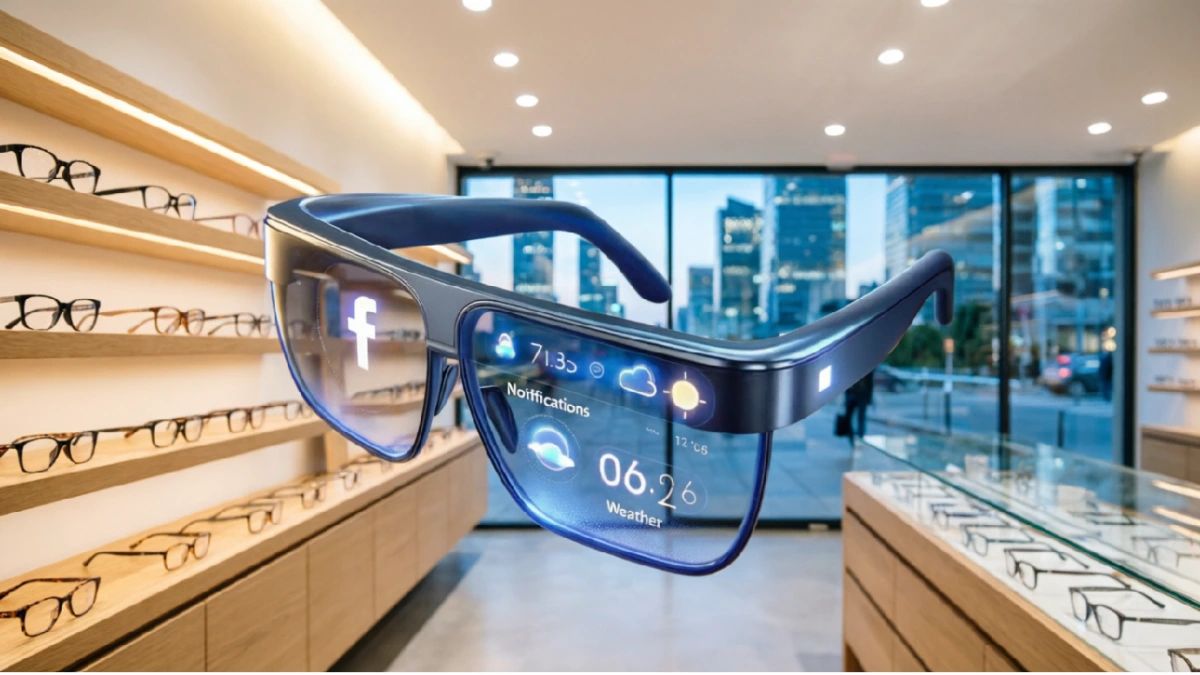
Meta AI smart glasses are no longer just a futuristic experiment. They have become one of the clearest signs that big tech wants AI to move off your phone and onto your face.
Instead of pulling out a smartphone to take a photo, ask a question, translate a phrase, listen to music, or check what is around you, Meta wants you to do it through glasses that look mostly like regular eyewear. That is the appeal. It is also where the privacy debate begins.
As of 2026, Meta’s smart glasses lineup includes Ray-Ban Meta, Oakley Meta, Meta Ray-Ban Display, and the newer Meta Glasses line created with EssilorLuxottica. Some models are built for everyday style, some for sport, and one includes a small in-lens display controlled by a neural wristband.
Here is everything you need to know before deciding whether Meta AI smart glasses are useful, overhyped, or somewhere in between.
What Are Meta AI Smart Glasses?
Meta AI smart glasses are wearable glasses with built-in cameras, microphones, speakers, voice controls, and Meta AI features. Depending on the model, they can capture photos and videos, answer questions about what you are seeing, translate conversations, play audio, take calls, and provide hands-free assistance.
Most current models do not show full augmented reality graphics in front of your eyes. That is important. Ray-Ban Meta, Oakley Meta, and the new Meta Glasses are mainly AI camera glasses, not full AR glasses.
The exception is Meta Ray-Ban Display, which adds a small in-lens display and comes with the Meta Neural Band for wrist-based gesture control.
The Main Meta AI Smart Glasses Models
Here is the simple version of Meta’s current smart glasses family:
| Model | Best For | Starting Price |
|---|---|---|
| Meta Glasses Adventurer | Everyday AI glasses at a lower starting price | $299 |
| Meta Glasses Starfire Kylie Edition | Fashion-focused smart glasses | $399 |
| Ray-Ban Meta Gen 2 | Classic Ray-Ban style with improved battery and video | $379 |
| Ray-Ban Meta Optics | Prescription-focused everyday glasses | $499 |
| Oakley Meta | Sport and performance use | Varies by style |
| Meta Ray-Ban Display | In-lens display and wristband control | $799 |
The newest Meta Glasses line is notable because it starts at $299 and comes in multiple styles, including Adventurer, Fury, and a Kylie Jenner collaboration. Meta says these glasses launch with Meta AI powered by Muse Spark from day one.
What Can Meta AI Smart Glasses Do?
The biggest reason people buy Meta AI smart glasses is convenience. They are designed for moments when reaching for your phone is awkward, slow, or distracting.
You can use them to:
- Take hands-free photos and videos
- Ask Meta AI questions by voice
- Ask questions about what you are looking at
- Listen to music, podcasts, and calls through open-ear speakers
- Send messages or make calls through supported apps
- Translate conversations in supported languages
- Use live captions on display models
- Get help reading signs, menus, or text
- Capture short social clips from your point of view
The camera is one of the strongest features. Many current models use an ultra-wide 12 MP camera, and newer models support up to 3K video recording, depending on the frame.
The AI features are where the product feels different from older smart glasses. You can look at a sign, object, menu, plant, landmark, or product and ask Meta AI what it is. That makes the glasses feel less like a camera accessory and more like a wearable assistant.
What Is New in 2026?
The biggest 2026 update is the arrival of the new Meta Glasses line. Unlike Ray-Ban Meta or Oakley Meta, these are branded more directly under Meta while still being made in partnership with EssilorLuxottica.
They launch with 26 style combinations, prescription compatibility, more adjustable fit options, and more than eight hours of battery life. Their charging case adds up to 40 extra hours.
Meta is also pushing new AI software features, including dynamic photo, which captures multiple frames and recommends the best shot. Live translation is expanding with more languages, including Japanese, Mandarin Chinese, Hindi, and Korean.
Another important update is less exciting: Meta One subscription testing. Meta’s help pages now say Conversation Focus is free for 3 hours per month, while Meta One Premium subscribers get 15 hours per month. Conversation Focus is the feature that helps amplify the voice of the person you are speaking with in noisy places. For buyers who care about accessibility or hearing support, that limit is worth knowing before purchase.
Battery Life and Charging
Battery life depends on the model.
Ray-Ban Meta Gen 2 offers up to 8 hours of typical use and up to 48 extra hours from the charging case. Meta Glasses offer more than 8 hours of use and up to 40 extra hours from the foldable charging case. Meta Ray-Ban Display offers up to 6 hours of mixed use and up to 30 hours with the case.
In real life, battery life will depend on how often you record video, use AI, stream music, or take calls. Video recording and AI features usually drain wearables faster than passive listening.
Are Meta AI Smart Glasses Real AR Glasses?
Not really, at least not most of them.
Ray-Ban Meta, Oakley Meta, and Meta Glasses are better described as AI smart glasses. They can see, hear, speak, record, and respond, but they do not place rich digital objects into your field of view.
Meta Ray-Ban Display moves closer to AR because it has an in-lens display for things like captions, translation, navigation, video calls, and app information. But it is still not the same as a full augmented reality headset.
Meta’s true AR work is still represented more by prototypes like Orion than by the consumer glasses most people can buy today.
Privacy: The Part Buyers Should Not Skip
Meta AI smart glasses raise real privacy questions because they put a camera and microphones into something that looks like normal eyewear.
Meta includes a capture LED to show when photos or videos are being taken. The company also provides privacy settings and controls for what users share. Still, the social concern is obvious: people nearby may not always notice when glasses are recording.
There is also the AI processing issue. When you ask the glasses questions about what you are seeing, visual data may be sent to Meta’s cloud for processing. That is how the glasses can answer questions about signs, objects, or scenes, but it also means buyers should understand what is being uploaded and reviewed under Meta’s policies.
The practical advice is simple: do not treat these glasses like ordinary sunglasses. Turn them off in private spaces, avoid recording people without permission, and be careful when looking at sensitive personal information.
Who Should Buy Meta AI Smart Glasses?
Meta AI smart glasses make the most sense for people who already know they want hands-free capture or wearable AI.
They are useful for creators, travelers, cyclists, parents, students, commuters, and people who want quick audio or voice features without wearing earbuds. They can also be meaningful for accessibility, especially for users who benefit from hands-free controls, visual descriptions, captions, or Be My Eyes support.
They are less convincing if you mainly want a full AR display, long video recording sessions, or strong privacy guarantees. They are also not ideal if you dislike being tied into Meta’s apps and account ecosystem.
Are Meta AI Smart Glasses Worth It?
For the right person, yes. Meta AI smart glasses are one of the most polished wearable AI products available right now. They look better than most smart glasses, the camera is genuinely useful, audio quality has improved, and the AI features are becoming more practical.
But they are not an automatic buy.
The best reason to get them is simple: you want glasses that can capture moments, answer quick questions, translate, take calls, and play audio without forcing you to pull out your phone. The best reason to wait is just as simple: the privacy trade-offs, subscription testing, and still-evolving AI features may not feel worth it yet.
Final Thoughts
Meta AI smart glasses show where consumer technology is heading. The phone is not disappearing, but more tasks are moving into wearables that can see and hear the world around us.
That makes these glasses exciting. It also makes them sensitive.
If Meta gets the balance right, smart glasses could become the next everyday device after smartphones and earbuds. If it gets the privacy, pricing, or subscription model wrong, people may decide that AI on their face is a step too far.
For now, Meta AI smart glasses are useful, stylish, and surprisingly practical, but they are also a product category buyers should enter with open eyes.
FAQs
What are Meta AI smart glasses used for?
Meta AI smart glasses are used for hands-free photos, videos, calls, music, voice commands, AI answers, live translation, and visual assistance.
Do Meta AI smart glasses have a display?
Most models do not have a display. Meta Ray-Ban Display does include an in-lens display and comes with the Meta Neural Band.
How much do Meta AI smart glasses cost?
Current models start around $299 for Meta Glasses, $379 for Ray-Ban Meta Gen 2, $499 for prescription-focused Ray-Ban Meta Optics, and $799 for Meta Ray-Ban Display.
Can Meta AI smart glasses record video?
Yes. Many models can record hands-free video through a built-in ultra-wide camera.
Are Meta AI smart glasses safe for privacy?
They include privacy controls and a recording indicator, but buyers should still use them carefully. The main concern is recording or processing visual information around other people without clear consent.
Do you need a subscription for Meta AI smart glasses?
No subscription is required for basic use, but Meta is testing paid Meta One plans that expand access to some features, including Conversation Focus.