
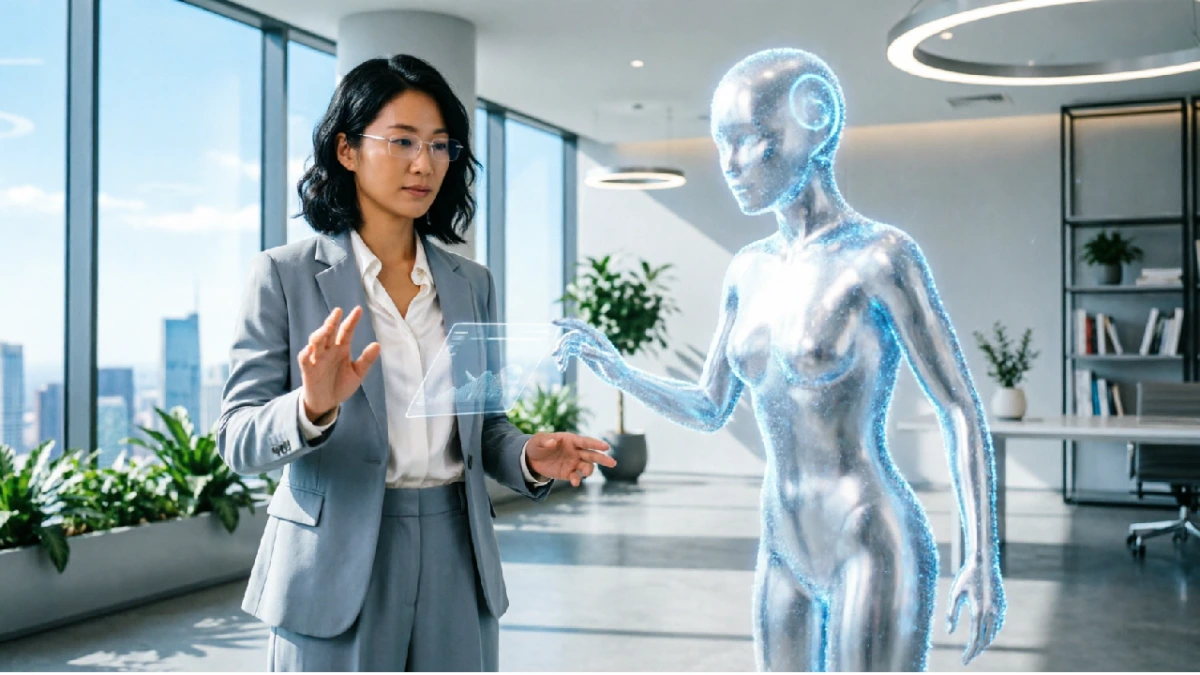
In the rapidly evolving landscape of artificial intelligence, the use of AI models is becoming increasingly prevalent. autonomous AI agents are poised to revolutionize how we approach work. This article explores the transformative potential of agentic AI, forecasting its impact on various industries and the nature of employment by 2026.
Understanding Autonomous AI Agents
Autonomous AI agents represent a significant leap forward in artificial intelligence, moving beyond mere reactive systems to proactively execute complex tasks. These sophisticated AI tools are designed to operate independently, making decisions and taking actions without constant human intervention, thereby reshaping the traditional workflow. The proliferation of agentic AI in 2026 is expected to redefine the capabilities of AI at work, driving unprecedented levels of automation.
Definition of Autonomous AI Agents
Autonomous AI agents are advanced AI systems capable of perceiving their environment, making decisions, and performing actions independently to achieve specific goals. Unlike current AI tools that often require explicit commands for each step, these autonomous agents can autonomously plan and execute multi-step tasks in real-world scenarios. This capability is fundamentally changing how businesses use AI, allowing them to automate complex processes and enhance overall operational efficiency.
Key Characteristics of Agentic AI
Agentic AI systems are distinguished by their ability to reason, plan, and adapt, demonstrating a level of intelligence that allows them to interact dynamically with their environment. These Autonomous AI agents can analyze vast amounts of data, learn from their experiences, and autonomously make informed decisions to optimize outcomes. The deployment of such AI technology in 2026 will accelerate AI adoption across the enterprise, offering powerful AI capabilities to a wide array of AI users.
The Role of Autonomous AI Agents in 2026
By 2026, AI agents will be integral to business operations, performing a diverse range of functions that were previously exclusive to human labor. These agents will automate routine and complex tasks, enhancing productivity and allowing human workers to focus on more strategic and creative endeavors. The increasing use of Autonomous AI agents is set to fundamentally reshape the labor market, ushering in a new era of collaboration between human agency and sophisticated AI systems.
The Impact of AI Agents on Work Processes
The integration of autonomous AI agents into work processes is not merely an incremental change; it represents a paradigm shift that will profoundly alter how organizations operate. This transformative impact will be felt across all sectors, from manufacturing to services, as businesses leverage agentic AI to streamline operations and foster innovation.
Automation and Workflow Integration
Autonomous AI agents are designed to seamlessly integrate into existing workflows, automating tasks that are currently time-consuming and prone to human error. This AI automation extends beyond simple repetitive actions, encompassing complex multi-step processes that require intricate decision-making, showcasing the potential of using AI agents. By 2026, the extensive deployment of these AI tools will allow enterprises to fully automate significant portions of their operational workflowThis dramatically increases efficiency and reduces operational costs, as AI automates routine tasks.
Enhancing Productivity with AI Capabilities
The robust AI capabilities of autonomous agents are set to significantly enhance productivity across various industries. These AI systems can process and analyze data at speeds and scales impossible for humans, providing insights that drive better decision-making and optimize resource allocation, particularly when using generative AI techniques. The ability of AI agents to autonomously manage and execute tasks will free up human employees, enabling them to engage in higher-value activities and fostering a more productive work environment within the digital economy.
Reshaping Business Processes in the Digital Economy
The advent of autonomous AI agents will fundamentally reshape business processes within the digital economy, as enterprise AI transforms traditional models.. From customer service, where advanced AI chatbots can handle complex queries, to software engineering, where AI agents can automate coding and testing, every facet of business will be transformed. This pervasive use of AI agents to automate and optimize operations will accelerate the pace of innovation, allowing businesses to adapt more quickly to market demands and maintain a competitive edge.
Human Agency in an AI-Driven Workplace
Balancing Automation and Human Agency
The pervasive deployment of autonomous AI agents necessitates a careful balance between advanced automation and the preservation of human agency. While AI agents are designed to automate complex and multi-step tasks, their effective integration requires humans to oversee and guide these AI systems. By 2026, The work with AI will emphasize collaboration, where human insights and creativity complement the efficiency of agentic AI, using AI agents to enhance productivity., ensuring that the human element remains central to strategic decision-making and innovation.
High-Value Work in the Age of AI
As AI agents continue to automate routine tasks, the nature of human work will shift towards high-value activities that leverage uniquely human capabilities. This transformation, accelerated by agentic AI in 2026, will see humans focusing on critical thinking, complex problem-solving, and creative endeavors. The use of AI agents will empower human workers to excel in roles requiring emotional intelligence, strategic foresight, and intricate communication, creating a more fulfilling work environment.
Addressing Job Loss Concerns
The prospect of job loss due to AI automation is a significant concern, but the future work with AI agents suggests a more nuanced outcome. While some roles may be displaced, the growth of agentic AI will also create new job categories and demand for new skills. Businesses will need to proactively prepare the workforce for this change, investing in training and upskilling programs to help employees adapt and thrive in an AI-driven economy by 2025.
Future Trends in AI Agentic Technology
Predictions for AI Agents in 2026
By 2026, predictions for AI agents indicate a significant leap in their capabilities and widespread enterprise adoption. We anticipate that agentic AI systems will become even more sophisticated, moving beyond current AI limitations to autonomously handle highly complex, multi-step projects across various industries. The integration of large language models and generative AI will empower these autonomous agents to not only automate tasks but also to innovate and create, fundamentally reshaping the digital economy.
Strategic Adaptation for Businesses
To thrive in this AI-driven future, businesses must strategically adapt by adopting agentic AI and embedding AI technology into their core operations. This means moving beyond merely using AI tools to a comprehensive integration of AI agents that can analyze data, optimize workflows, and enhance productivity. Enterprises that proactively deploy AI agents will gain a competitive edge by 2026, allowing them to automate complex processes and foster a more efficient and innovative work environment.
Preparing the Workforce for Change
Preparing the workforce for the widespread use of AI agents is crucial for successful AI adoption. This involves significant investment in re-skilling and up-skilling programs, focusing on human agency and collaboration with AI systems, particularly in the context of enterprise AI. By 2026, employees will need to understand how to work with AI agents, manage AI automation, and leverage AI capabilities to enhance their own productivity. This proactive approach will ensure a smooth transition and harness the full potential of AI at work.
FAQs
What are autonomous AI agents?
Autonomous AI agents are advanced artificial intelligence systems designed to operate independently, making decisions and performing actions without constant human intervention, as they embody the principles of AI use.. These sophisticated AI tools are capable of handling multi-step tasks autonomously, perceiving their environment, and adapting to achieve specific goals. Their deployment in 2026 will significantly reshape how we work with AI, enabling a new level of automation and productivity across the enterprise.
How will AI agents impact jobs in 2026?
In 2026, AI agents will profoundly impact the labor market by automating routine and complex tasks, leading to increased productivity and efficiency. While some roles may experience job loss due to AI automation, agentic AI will also create new job opportunities requiring skills in managing and collaborating with AI systems. The focus will shift towards high-value work, where human agency complements AI capabilities, ensuring a balanced work with AI environment.
What is agentic AI and its significance?
Agentic AI refers to AI systems that possess the ability to act autonomously, make decisions, and execute multi-step plans to achieve specific objectives. Its significance lies in its capacity to move beyond mere reactive responses, enabling advanced automation and problem-solving without explicit human commands. In 2026, agentic AI will accelerate AI adoption, empowering businesses to deploy sophisticated AI solutions that transform workflows and drive innovation across the digital economy.
Conclusion
Summarizing the Transformative Potential of AI Agents
The transformative potential of autonomous AI agents in 2026 is immense, promising to reshape every facet of work with AI, as industries embrace the power of AI automates. These sophisticated AI systems, with their agentic AI capabilities, are set to revolutionize workflows, enhance productivity, and enable unprecedented levels of automation. By allowing AI agents to automate complex, multi-step tasks, businesses can unlock new efficiencies and foster innovation, driving the digital economy forward.
Final Thoughts on Human-AI Collaboration
The future of work will be defined by seamless human-AI collaboration, where human agency and the advanced capabilities of autonomous AI agents converge, especially in the realm of AI work. While AI agents can automate and optimize, the integration of AI work will redefine job roles across industries. human oversight, creativity, and strategic thinking remain indispensable. Preparing the workforce for this evolving landscape by upskilling and adapting to work with AI agents will be crucial for maximizing the benefits of agentic AI in 2026 and beyond.
Looking Ahead to 2026 and Beyond
Looking ahead to 2026, the widespread deployment of autonomous AI agents will mark a pivotal moment in the evolution of artificial intelligence. Businesses that strategically adopt agentic AI will gain a competitive edge, using AI to accelerate innovation and optimize operations. This proactive embrace of AI technology will not only reshape industries but also redefine the very nature of work, fostering a future where AI helps humans achieve unparalleled productivity.