
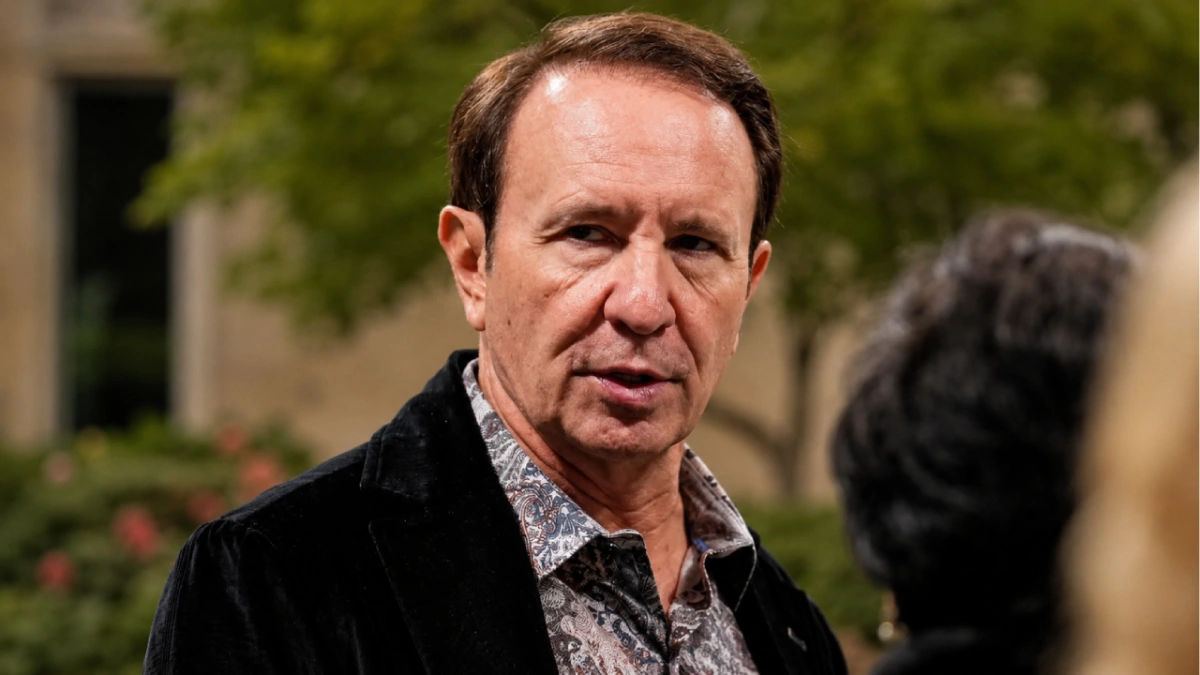
Trump’s Greenland Envoy: Jeff Landry, the recently appointed United States envoy to Greenland, is facing an uphill battle on his mission to make friends and mend diplomatic fences, particularly after the U.S. threatened to seize Greenland. His role comes at a crucial time as the Arctic region gains increasing geopolitical importance, and past American actions continue to cast a long shadow over relations with both Greenland and Denmark.
Historical Context: US Invaded
The historical context of U.S. involvement in Greenland is complex and fraught with tension, particularly given the controversial proposals made during the Trump administration, which have been covered extensively by media outlets like BBC. The very idea that the U.S. might want to acquire Greenland, or even seize Greenland by force, created a diplomatic crisis that still resonates deeply with the people of Greenland and the Danish government. This background makes Landry’s role as special envoy all the more challenging, as he must navigate a legacy of perceived threats to Greenland’s autonomy, including the time when the U.S. threatened to seize Greenland.
Impact of US Intervention in Greenland
The direct and indirect impacts of past U.S. intervention in Greenland are significant and have shaped public perception, often highlighted in BBC reports. The talk of the U.S. wanting to take over Greenland, or even the more extreme suggestion to seize Greenland by force, caused considerable alarm in Nuuk and Copenhagen, drawing widespread attention from BBC News. This historical baggage means that any new U.S. diplomatic effort, reported by BBC News, is viewed with caution by Greenlanders and the Danish government alike, making Landry’s mission inherently delicate.
Historical Relations Between the US and Denmark
The historical relations between the U.S. and Denmark, particularly concerning Greenland, have seen periods of both close cooperation and considerable strain. While Denmark and the U.S. are long-standing allies, the Trump administration’s open desire to acquire Greenland, a Danish territory, undoubtedly strained these ties. The Danish government’s firm rejection of the proposal highlighted a “red line” in their foreign policy, underscoring the complexities that Landry must address as he attempts to build new bridges and resolve a diplomatic crisis that was sparked by these historical tensions.
Legacy of Past Conflicts
The legacy of past conflicts, particularly the recent diplomatic spats under President Donald Trump, continues to influence the present mission of Envoy Landry, as he seeks to resolve a diplomatic crisis sparked by those events. The repeated announcements and discussions about the U.S. wanting to take control of Greenland left a lasting impression, not only on the Danish government but also on the Greenlandic prime minister, Jens-Frederik Nielsen, and the entire Greenlandic population. This history creates an inherent challenge for Landry, who must work to overcome this deeply ingrained skepticism and demonstrate a sincere commitment to respectful and collaborative relations, moving beyond the shadow of previous attempts to simply acquire Greenland as part of the United States.
Current Political Landscape
Trump’s Interest: Why He Wants Greenland
President Donald Trump’s enduring interest in Greenland, an Arctic island, stemmed from a perception of its strategic value and abundant natural resources. His administration viewed the acquisition of Greenland as a significant gain for U.S. national security, enhancing America’s military presence in the Arctic and providing a valuable new territory, a perspective that was notably echoed when Trump announced his intentions. The idea to acquire Greenland, even by force, was not merely a fleeting thought but was reportedly discussed within national security circles, highlighting the strategic significance attributed to this Danish territory by the former US president.
Greenland’s Response to US Interests
The people of Greenland, along with their government in Nuuk, met the Trump administration’s proposals with a firm and unequivocal rejection, a stance that has been reported by both BBC and TV2. The Greenlandic Prime Minister, Jens-Frederik Nielsen, publicly stated that Greenland was not for sale, a sentiment widely echoed by Greenlanders across the Arctic territory. This strong response underscored Greenland’s desire for self-determination and its unwillingness to be treated as a mere commodity in geopolitical bargaining, effectively drawing a “red line” against any attempts to take over Greenland or make it part of the United States.
Political Implications for Denmark
For Denmark, the Trump administration’s open desire to acquire Greenland, a Danish territory, created a significant diplomatic crisis. The Danish government, including its foreign minister, had to navigate a delicate balance between maintaining its longstanding alliance with the US and staunchly defending Greenland’s sovereignty. The proposals tested Denmark’s foreign policy and highlighted the complexities of managing its relationship with Greenland, particularly as discussions emerged about the possibility of the U.S. attempting to seize Greenland by force, a notion that was firmly rebuffed by Denmark and Greenland.
Challenges Faced by the Envoy
Cultural Sensitivity and Understanding
Envoy Jeff Landry faces an uphill battle on his mission to make friends in Greenland, particularly concerning cultural sensitivity and the need for a working group to address mutual concerns. The people of Greenland hold a deep connection to their Arctic heritage, and any diplomatic effort must respect these traditions, which are central to discussions in working groups. Overcoming past perceptions of the US wanting to take over Greenland requires a delicate approach, where understanding local customs and the Greenlandic language, along with a genuine appreciation for their self-determination, will be paramount for the special envoy.
Building Trust and Relationships
Building trust is crucial for the envoy to Greenland, Jeff Landry, especially after the diplomatic crisis sparked by the Trump administration’s proposals to acquire Greenland. For U.S. national security interests to align with those of Greenland and Denmark, the special envoy must demonstrate a long-term commitment beyond transactional interests. Establishing enduring relationships requires consistent engagement with Greenlanders and their leaders, including the Greenlandic Prime Minister, Jens-Frederik Nielsen, to ensure that the U.S. is seen as a reliable partner rather than a country seeking to control Greenland.
Navigating Geopolitical Tensions
The Arctic region is a zone of increasing geopolitical tension, making Envoy Landry’s mission to make friends inherently complex. His role involves navigating the intricate relations between Greenland and Denmark, while also addressing concerns from other Arctic powers. The legacy of the Trump administration’s ambition to seize Greenland still casts a long shadow, and Landry must work to reassure Nuuk and Copenhagen that U.S. interests are now aligned with cooperation, not with attempts to acquire Greenland or establish military presence in Greenland without consent, thus avoiding any further diplomatic crisis.
Future Prospects for US-Greenland Relations
Potential Collaborations and Partnerships
Despite the past challenges, there are significant opportunities for future collaborations and partnerships between the U.S. and Greenland, especially in areas highlighted by TV2 as critical for both parties. The special envoy can focus on areas such as climate research, sustainable development, and economic investment, which align with the interests of the people of Greenland. Initiatives that support Greenland’s self-sufficiency and protect its unique Arctic territory can help foster goodwill and move beyond the historical baggage of proposals to take over Greenland, establishing a more equitable relationship and further strengthening U.S. national security in the region.
The Role of US Hospitals in Greenland
A promising avenue for strengthening ties could involve the role of U.S. hospitals in Greenland, focusing on healthcare collaboration. This could include training programs for American doctors and other medical professionals, or joint research initiatives that address health challenges unique to the Arctic, as suggested in discussions by working groups. Such humanitarian efforts would demonstrate a genuine commitment to the welfare of Greenlanders, offering tangible benefits that move beyond geopolitical interests and help mend fences, showing that the U.S. is not looking to seize Greenland, but rather to partner with it.
Long-term Strategies for Diplomacy
Developing long-term strategies for diplomacy is essential for the U.S. envoy to Greenland to ensure sustained positive relations, which may involve forming a working group to tackle key issues. This includes consistent, respectful engagement with the Greenlandic Prime Minister, Jens-Frederik Nielsen, and the Danish government, moving past the perception that the U.S. wants to acquire Greenland. The establishment of a new U.S. Consulate building in Nuuk could be a vital step, symbolizing a permanent commitment and enabling continuous dialogue, preventing any future diplomatic crisis and solidifying a cooperative partnership that benefits both U.S. national security and the people of Greenland for decades to come.